First Spin: Miles Davis - Kind of Blue
Beyond hearing music, this is a lesson in how to listen.
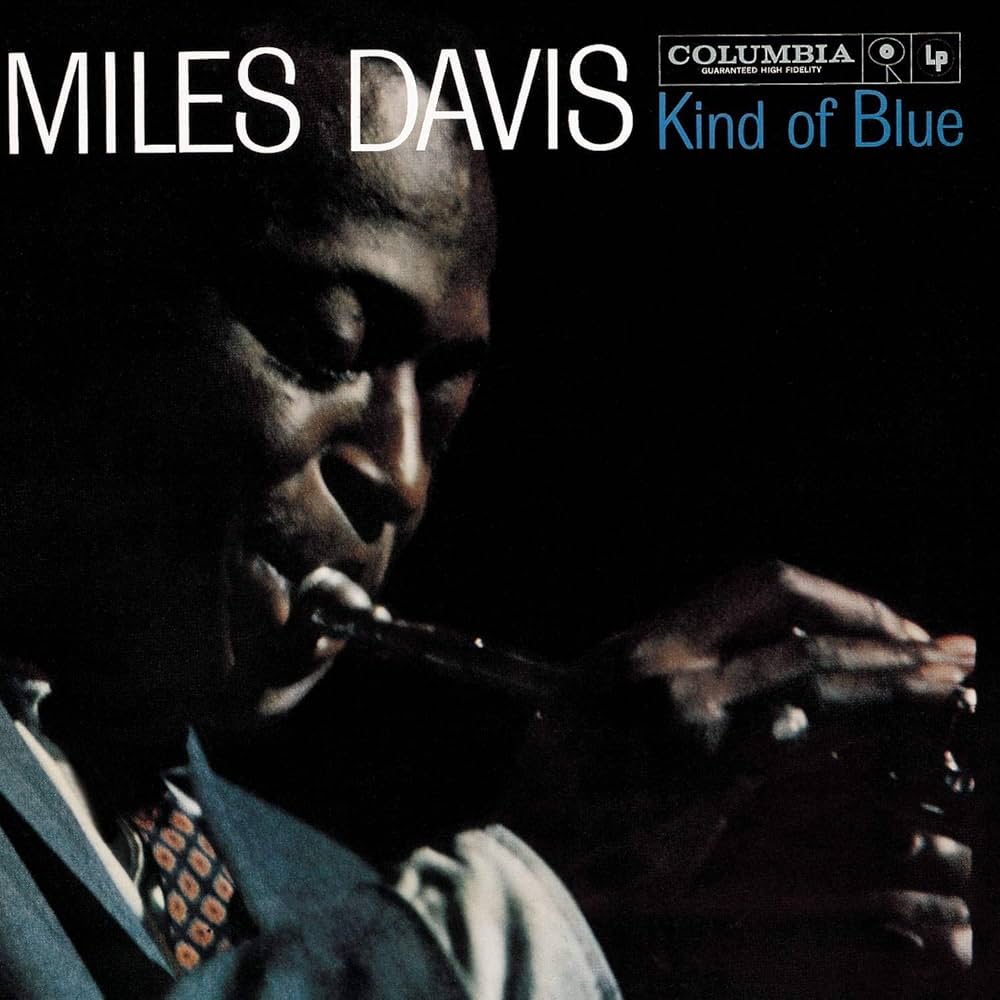
You've done the setup. Your turntable is dialed in, your vinyl is clean, and you're ready to move beyond just hearing music to truly listening. This guide is designed to walk you through that ritual with one of the most important, beautiful, and rewarding albums ever recorded.
The Album: Miles Davis - Kind of Blue (1959)
Why this one? Because it is pure atmosphere. It's the sound of a rainy New York City night, of quiet confidence, of six master musicians inventing a new language in real-time. It is an album that teaches you how to listen—not just to notes, but to the space between them.
Session Prep: Setting the Stage
- Dim the Lights: This isn't just for mood. It reduces visual distraction and heightens your sense of hearing.
- Silence Your Phone: The goal is 45 minutes of unbroken focus. Give yourself this gift.
- Find the Sweet Spot: Sit in a comfortable chair, ideally positioned equidistant between your two speakers. This is where the stereo image will resolve into a tangible soundstage.
- Read the Liner Notes: Before the needle drops, hold the record jacket. Read the original liner notes by pianist Bill Evans. He gives you a beautiful insight into the "spontaneous improvisation" that birthed this music.
The Pressing: The Physical Artifact
Before we drop the needle, a word on the artifact itself. Kind of Blue is one of the most repressed albums in history. An original 1959 Columbia "six-eye" pressing is a collector's prize, but modern audiophile reissues from labels like Analogue Productions or Mobile Fidelity can be astonishing. A good pressing will have a vanishingly low noise floor—the silence should be inky black. Before you play, inspect the dead wax. Look for handwritten initials or symbols. These are the signatures of the mastering and cutting engineers, the artisans who shepherd the sound from tape to lacquer. Their craft is what you are about to experience.
The Ritual: Needle Drop
Place the record on the platter. Take a deep breath. Gently lower the stylus onto the outer edge of the vinyl. You'll hear a faint crackle—that's the sound of potential. Now, close your eyes.
Side A: A Study in Cool
Track 1: "So What"
It doesn't start, it materializes. Paul Chambers' bass and Bill Evans' piano sketch a quiet, contemplative intro. The first thing to notice is the space. On a good pressing, the instruments don't just come from the speakers; they occupy a specific place in the room. The piano has a crystalline, felt-hammer-on-string texture, while the bass should sound like a living thing—all resonant, vibrating wood.
Then, at (0:34), Chambers introduces the most famous bassline in jazz. It's not just a series of notes; it's a confident, laconic statement of purpose.
Miles's trumpet enters at (1:35), not with a burst of fire, but with a cool, silvery tone that hangs in the air like smoke. He's speaking, not shouting.
The contrast when Coltrane's tenor sax arrives at (3:35) is distinct. His solo is a flurry of searching, reedy notes—the "sheets of sound" he was famous for, but contained within the song's effortless cool. Cannonball Adderley's alto sax follows, bringing a joyful, blues-soaked flavor that feels like a sudden ray of sunshine.
Track 2: "Freddie Freeloader"
The vibe shifts. This is the only track with Wynton Kelly on piano, and his feel is completely different from Bill Evans. It’s earthier, more grounded, with a bluesy, almost bar-room swagger. Listen for the percussive "clink" of his chords; they have a tangible weight.
Miles's solo here is a study in economy. He's not wasting a single note. The sound is less about the notes he plays and more about the spaces he leaves, letting the rhythm section simmer. It's the audio equivalent of a perfectly tailored suit—nothing extra, just pure style.
Track 3: "Blue in Green"
A profound, melancholic hush. This is arguably the ultimate test of a system's ability to reproduce intimacy. It begins with Bill Evans' lush, impressionistic piano chords, which should sound like watercolor spreading on paper.
At (0:18), Miles enters with the Harmon mute on his trumpet, creating that iconic, fragile, whisper-like sound. A great system will let you hear the texture of his breath around the edges of the notes. It's incredibly intimate, like a secret being shared. This is where the silence of a good vinyl pressing pays off. The track should emerge from a deep, black background, making the delicate sounds feel even more profound.
Side B: Rhythmic Explorations
Track 4: "All Blues"
The hypnotic, swaying 6/8 waltz time signature is the main attraction here. Focus your attention on the right speaker at the beginning. That's Jimmy Cobb's brushes on the snare. It shouldn't be a generic 'hiss'; it should sound like fine-grit sandpaper sweeping over silk, a distinct and complex texture that drives the entire track.
Paul Chambers’ bassline is the thick, sticky molasses at the center of this groove. Each soloist—Miles, Adderley, Coltrane—paints with a different color over this deep blue canvas, but the rhythmic pulse is relentless and deeply satisfying.
Track 5: "Flamenco Sketches"
The album's most ambitious piece. It's not a song with a traditional melody but a series of five modal scales, over which each soloist improvises. This is where you stop listening for a tune and start listening for mood and color.
It's a conversation. Listen for the tonal shift as each soloist takes over. Miles is contemplative and spacious. Coltrane is searching and complex. Adderley is lyrical and soulful. Bill Evans is harmonically rich and painterly. Your stereo should present this as five distinct artistic statements, a sequence of sonic landscapes that flow naturally into one another. It's the ultimate expression of the album's concept: jazz as a spontaneous art of the moment.
The Verdict: An Essential Artifact
As the last notes of "Flamenco Sketches" fade and the stylus enters the run-out groove, let the silence hang in the air for a moment. You've just done more than play a record. You've participated in a vital moment in musical history. Kind of Blue on vinyl is not just music; it's a tangible piece of the atmosphere from Columbia's 30th Street Studio in 1959. It is a testament to subtlety, space, and the creative fire that ignites when masters convene. This isn't just a record to own; it's a record to know. You've started the ritual. Welcome to the Guild.