First Spin: Pink Floyd - The Dark Side of the Moon
A 43-minute journey into inner space.
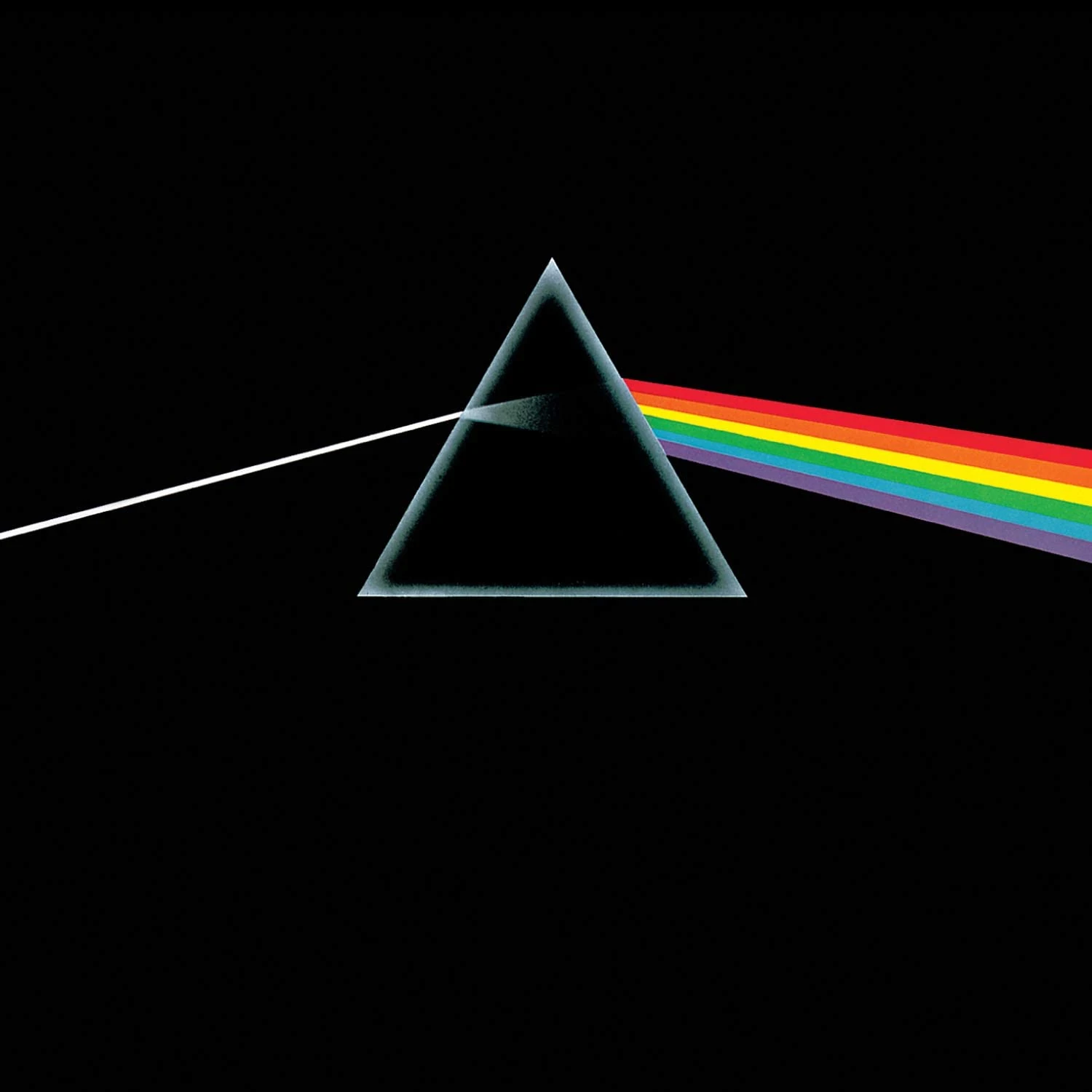
This is less a collection of songs and more a single, continuous, 43-minute journey into a meticulously crafted sonic world. It's an exploration of the human condition that remains profound, engineered to be an immersive, three-dimensional experience.
The Album: Pink Floyd - The Dark Side of the Moon (1973)
Why this one? Because it is the quintessential headphone album and a landmark in studio production. Engineered by a young Alan Parsons, it uses the stereo field as an instrument in itself. This album teaches you to listen not just to the music, but to the space around the music.
Session Prep: Setting the Stage
- Headphones Recommended: While it will fill a room beautifully, the best way to first experience the intricate sound design is with a good pair of over-ear headphones. It puts you in the center of the mix.
- Total Darkness: This is non-negotiable. Turn off the lights, close the blinds. The album’s title is your instruction manual.
- Uninterrupted Listening: You are about to embark on a continuous journey. Silence your phone and remove all distractions.
- Study the Gatefold: Before you begin, open the gatefold jacket. Look at the iconic prism artwork and the simple heartbeat graphic. There are no photos of the band. The art tells you that the sound is the star of the show.
The Pressing: The Physical Artifact
For an album this sonically ambitious, the pressing is paramount. An early UK Harvest pressing (look for the "SHVL 804" matrix and a solid blue triangle label) is a collector's prize, renowned for its dynamic, almost 'liquid' quality. The dead wax often has "HTM" etched there, the signature of master cutter Harry T. Moss. A great pressing delivers a silent background from which the heartbeat can emerge, renders the clocks in "Time" as distinct instruments rather than a chaotic jumble, and preserves the full, breathtaking dynamic range of Clare Torry's vocals without a hint of sibilance or distortion.
The Ritual: Needle Drop
Gently lower the stylus into the lead-in groove. You will hear... nothing. And then, a faint, distant thump. A heartbeat. Deep and centered. Let it draw you in.
Side A: The Onset of Madness
Track 1 & 2: "Speak to Me" / "Breathe (In the Air)"
The heartbeat fades in, joined by a collage of sounds that act as an overture: ticking clocks, a cash register, maniacal laughter, screams. In headphones, these sounds should swirl around you, creating a disorienting 3D space. At (1:12), this tension explodes into the massive release of "Breathe." David Gilmour's slide guitar should sound liquid and buttery, floating over Richard Wright's warm, shimmering electric piano chords. The stereo separation here is key—the instruments are painted on a wide canvas.
Track 3: "On the Run"
A pure synthesizer sequence, groundbreaking for its time. This is a test of your system's rhythm and pace. The hi-hat pattern from the EMS VCS 3 synth should be perfectly steady, like wheels on a track. Listen for the Doppler effect: the sounds of planes and explosions should feel like they are flying past your head, moving from front to back, not just panning left and right. This is Alan Parsons demonstrating the studio's quadraphonic mixing capabilities.
Track 4: "Time"
The cacophony of clocks at the start is an ultimate hi-fi test. On a well-calibrated system, you shouldn't just hear a mess of ringing; you should be able to pick out individual clocks in different locations across the stereo field. Then comes Gilmour's guitar solo at (2:20). The texture of the guitar tone should be sharp and biting, but also soulful and incredibly melodic. Each note has a long, singing decay that should be clear and free of distortion.
Track 5: "The Great Gig in the Sky"
This is all about Clare Torry's improvised, wordless vocal performance. A good pressing and cartridge will capture the full dynamic range of her voice, from a delicate whisper to a raw, powerful scream, without breaking up. It's pure emotion captured on tape, and the effect should be arresting.
Side B: The Consequences
Track 6: "Money"
The iconic cash register loop, meticulously assembled by hand on tape, is another test of clarity. You should hear the distinct sounds of coins, receipt paper tearing, and the register drawer opening in a steady, 7/4 rhythm. The genius here is the contrast: the first minute is dry and punchy, and then at (1:32) the band kicks in and the sound becomes huge and wet with reverb. Dick Parry's sax solo should sound raw and bluesy, with a slightly gritty edge.
Track 7: "Us and Them"
A profound shift in mood. The sound is drenched in a beautiful, long reverb that should create an almost cathedral-like sense of space. Richard Wright's piano and organ chords are lush and spacious. The saxophone returns, but here it’s not raw; it’s smooth, smoky, and melancholic, weaving beautifully between the vocal lines.
Track 8-10: "Any Colour You Like" / "Brain Damage" / "Eclipse"
This is the final, seamless suite. "Any Colour You Like" is a psychedelic funk instrumental, a sonic conversation between Gilmour's guitar and Wright's synthesizer. The transition into "Brain Damage" should be flawless. Roger Waters's vocal sounds intimate and slightly unhinged. When the female background singers enter in the chorus, the sound should bloom, becoming grand and choral. This builds into the massive crescendo of "Eclipse," which should feel emotionally and sonically huge before it all cuts out, leaving only the fading heartbeat from the very beginning.
The Verdict: A Sonic Universe
As the heartbeat fades into the run-out groove, stay in the silence for a moment. You’ve just experienced an album as it was meant to be heard: as a single, flawless piece of art. The Dark Side of the Moon is more than a record; it’s an immersive world of sound, a benchmark in production that remains stunning five decades later. It’s an essential artifact for understanding how the recording studio itself can be the most important instrument of all. Welcome to the Guild.